Monday, March 21, 2022

Ask, just ask

I am short on ideas of topics that I should elaborate on in a blog article. So, I remind you all that if you thing of a topic that you think I might be able to clarify, please let me know. It costs you nothing. I might not even answer. But I certainly am not going to address the topic if you don't ask.

I look at and respond to Comments anywhere on my blog, but I recognize that some don't like google's requirement for google account. Thus you can also send me a question to my gmail address which simply is my name - JohnMoehrke

The rules are simple:

  • Topics I'll cover include anything in my banner specific to Healthcare Interoperability Standards  
    • Health Information Exchange, 
    • Document Exchange 
    • XDS/XCA/MHD, 
    • mHealth, 
    • Patient Identity, 
    • Provider Directories, 
    • FHIR, 
    • Consent, 
    • Access Control, 
    • Audit Control, 
    • Accounting of Disclosures, 
    • User Identity, 
    • Authorization, 
    • Authentication, 
    • Encryption, 
    • Digital Signatures, 
    • Transport/Media Security, 
    • De-Identification, Pseudonymization, Anonymization, and 
    • Blockchain.
  • All questions and suggestions posted are subject to this Blog's Policies.
  • If I don't know or cannot otherwise answer your question, I'll let you know.
  • Questions are not necessarily answered or addressed in the order received.

Thursday, March 3, 2022

IHE Basic Audit Implementation Guide

Updated May 4th, 2022 -- Trial Implementation released. The Implementation Guide is now named Basic Audit Log Patterns (BALP) Version 1.1.0.

Supporting Privacy Principles to give transparency to how a Patients data are used is one of the goals of a new Implementation Guide from IHE. The AuditEvent profiles in this guide can also be used for Security purposes.

The Basic Audit Log Pattern (BasicAudit) Content Profile defines some basic and reusable AuditEvent patterns. Defining formally an Audit Creator and an Audit Consumer actors (similar to how IHE has Content Creator and Content Consumer in the Document space).


The Audit Log Patterns defined here rely on the ATNA Profile for transport of the AuditEvent and query/retrieval of AuditEvents previously recorded. The patterns defined here may be used as they are, or further refined to specific use-cases. Where a more specific audit event is defined, it should be derived off of these basic patterns. Thus a more specific AuditEvent would be compliant with one or more of the AuditEvent patterns defined here.

This implementation guide is intended to be fully compliant with the HL7
FHIR specification, providing only use-case driven constraints to aid with interoperability, deterministic results, and compatibility with ATNA and other IHE Profiles.

This Implementation Guide is not about the "ANY request/response", this is about what should be put into an AuditEvent record that "auditable event" happened.

Specifically, there are a set of patterns (profiles) defined for the AuditEvent content that should be recorded when any of the following happens:

Wednesday, March 2, 2022

IHE IT-Infrastructure - March 2022

IHE IT-Infrastructure committee has been very busy this winter quarter. Today we release updates to 9 different publications:

New Publication

  •  mCSD 3.5.0 - conversion from PDF to IG Publisher
  •  MHDS 2.3.0 - conversion from PDF to IG Publisher
  •  Metadata Handbook 2.1 - conversion from PDF to markdown/html

Minor/Patch update publications

  •  MHD 4.1.0 - minor updates
  •  PDQm 2.4.0 - minor updates to fix bugs, id, and canonical uri
  •  PIXm 3.0.2 - patch update to fix id
  •  FormatCode 1.1.0 - minor updates to Rad, and canonical URI

Public Comment

  •  Basic Audit 1.0.1 
  •  mCSD 3.6.1 - updates to support MHD-to-a-Federation work item

Also

  • ITI Technical Framework - patch to typos
  • addition of above Basic Audit IG
  • PCC index fixes
  • experimental RSS feed for new FHIR releases

Find all of this at https://profiles.ihe.net

How to comment?

  • Each Implementation guide has IG specific links in the footer of each page
  • "New Issue" will take you to a github issue entry form, with the proper template for commenting (this requires a github account)
  • "Issues" will take you to the known issues, to confirm that the issue you noticed has been reported already.
  • "Propose a change" is a web form for those that don't have github accounts


Tuesday, January 11, 2022

IHE IT-Infrastructure January Public-Comment

The IHE IT-Infrastructure domain has been doing some light conversion of existing IHE-Profiles and publications to the modern html publication and use of the Implementation Guide publisher format. The public-comment is focused on uncovering mistakes in this conversion. There are no intended new features in these releases. However, there are differences that are driven by the publication platform. There is expectation that these new publication formats will enable better implementations, testing, and enhancements.

Document Sharing Metadata Handbook


IHE Document Sharing depends on document metadata, folder metadata, and submission set metadata. This handbook guides a community at defining how they will use these metadata fields. Mostly defining the ValueSets to be used within their community. Where these ValueSets might include vocabulary from national, regional, or local domains. 

The change expected in this publication is specifically just to move to the new html publication form. With html publication format there can be much more rich linking into and out of the text. So the text should be easier to understand, and easier to reference. 

Mobile Health Document Sharing

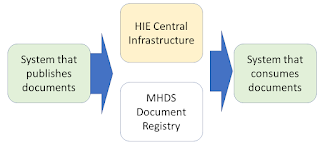
The Mobile Health Document Sharing (MHDS) shows how to build a Document Sharing Exchange using IHE-profiled FHIR® standard, rather than the legacy IHE profiles that are dominated by XDS and HL7® v2. This Implementation Guide assembles other IHE Implementation guides (Profiles) and defines a Document Registry Actor.


Version 2.2.0 is intended to be changes to the publication mechanism from WORD/PDF to an Implementation Guide published using the IG-Publisher. However, some other changes have been necessary due to the passing of time.
  • Mentions of DocumentManifest are now List.source due to the change in MHD.
  • Mentions of the PMIR Patient Identity Manager are changed to Patient Identity Registry due to change in PMIR.
  • This version has a CapabilityStatement that was not previously published.
  • Updates due to changes in the IUA profile, such as the additional leverage of the Authorization Server Metadata Option.
  • Removed section 50.7 as the current HIE-Whitepaper contains MHD and MHDS now.
  • Diagrams have been changed to support the above changes.

Mobile Care Services Discovery

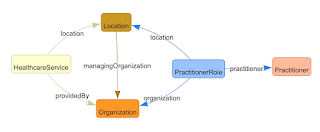
The Mobile Care Services Discovery (mCSD) supports RESTful queries across related care service resources. The loosely coupled design and flexible querying capability of the mCSD Profile means it can be deployed within a variety of eHealth architectures and support a wide array of care workflows.


Version 3.4.0 is intended to be changes to publication mechanism from WORD/PDF to an Implementation Guide. 
  • Removed inline UML text and moved it to images-source/
  • Removed reference to setting meta.profile as it is redundant
  • Added sections in actor requirements describing the requirement of providing a capability statement Volume 1
  • Updated the canonical URL for the organization hierarchy extension to http://profiles.ihe.net/ITI/mCSD/StructureDefinition/IHE.mCSD.OrganizationHierarchy
  • Added links to the structure definitions for resource profiles to ITI-90 and ITI-91
  • Changed structuredefinitions for Facility and Jurisdiction to use an invariant for the type requirement instead of slicing.
  • Added in text to show that searches can use GET or POST ITI-90 Message Semantics.
  • Added in retrieve (GET RESOURCE/ID) message section starting at ITI-90
Note, there will be further enhancements in the coming quarter to enable use-cases such as using MHD to access a federation of Communities.

HTML navigation

There is now also a new feature across the whole the publications. Now wherever there is a header, you will find a link icon that you can use to get the deep link to that header. This enables easier references to sections. 

Commenting

Public-Comment is welcome from anyone. You do not need to be a member. Comments can be submitted on these in three different ways. Comments open until February 12th. 
  1. Using the Web based form found at https://www.ihe.net/ITI_Public_Comments/
  2. Using a spreadsheet emailed to iticomments@googlegroups.com
  3. Using GitHub issue submission (provided you have a Github account and are a member of the IHE github community)
    1. Metadata Handbook Issue tracker
    2. MHDS Issue tracker
    3. mCSD Issue tracker
I really want to encourage membership in IHE IT-Infrastructure committee.

Wednesday, January 5, 2022

PIXm webinar

There is now a short webinar recording available for PIXm


This and other IHE recorded webinars can be found on the IHE International YouTube channel.


The PIXm implementation guide can be found on the IHE Profiles.ihe.net site where all of the IT-Infrastructure specifications are published.

Note that PIXm and PMIR do have different feed patterns, these are intended. I explain that in this article. 

Thursday, December 30, 2021

Glad 2021 is now passed

 I am reminded of "This too shall pass.", and I really hope it is true. The past two years have been monotonous, with very little positive things to get excited about. That said, I expect 2022 will simply be a workhorse of a year with small advancements that are not clear today. Yeah, that is the most blah prediction.

The most positive is that my household family continue to be COVID-19 free. However I lost my father with COVID-19 as a factor. COVID-19 has been the healthcare story in the standards I work on, but is also the thing that is preventing the standards groups from gathering and being more productive. I don't mind the pace slowdown, and initially didn't mind the lack of face-to-face meetings, but lately I have found myself wishing for the face-to-face workgroup meetings. I likely just want some of the positive meeting dynamics, while noting that most of the time the meetings were compulsory and a waste of time.

The last time I did a year-end report was at the end of 2017 - HIE Future is Bright - stepping into 2018. Looking back at that report, it is rather disappointing that none of the expectations have been achieved, yet so much has happened toward the direction of each of these. The activities that have happened are clear now that they were necessary, but of course at the time it felt like everything was ready for progress.

"The secret of getting ahead is getting started. The secret of getting started is breaking your complex overwhelming tasks into small manageable tasks, and then starting on the first one." - Mark Twain

Over the year, my blog saw mostly the same amount of visitors (90k), and I posted mostly the same number of articles (30). The biggest impact I had this year:
  1. IHE whitepaper on Health Information Exchange models (3.7k)
  2. From Implementation-Guide to IHE-Connectathon (2.7k)
  3. Healthcare use of Identity level of assurance (2k)
  4. When is a document not a Document but still a document? (1.6k)
  5. Agile improvements toward #FHIR (1.5k)
  6. Security of #FHIR implementations concerns (1k)
It is good to see that the Alisa Knight cybersecurity attacks on #FHIR were not a big reason for visitors to my blog. 

2021 Themes

Health Information Exchange using FHIR

Healthcare IT Security

Presenting and giving Tutorials

Fun